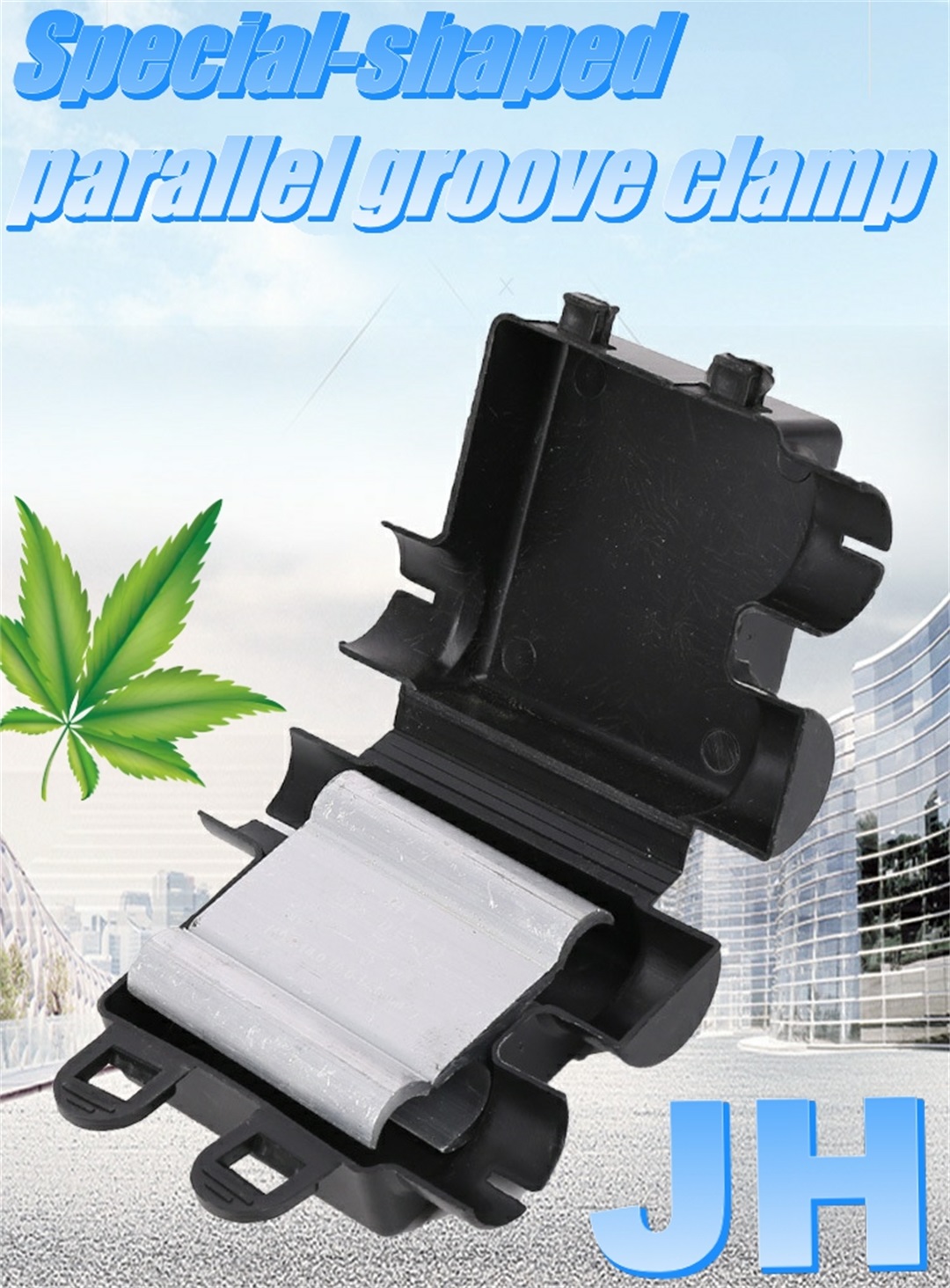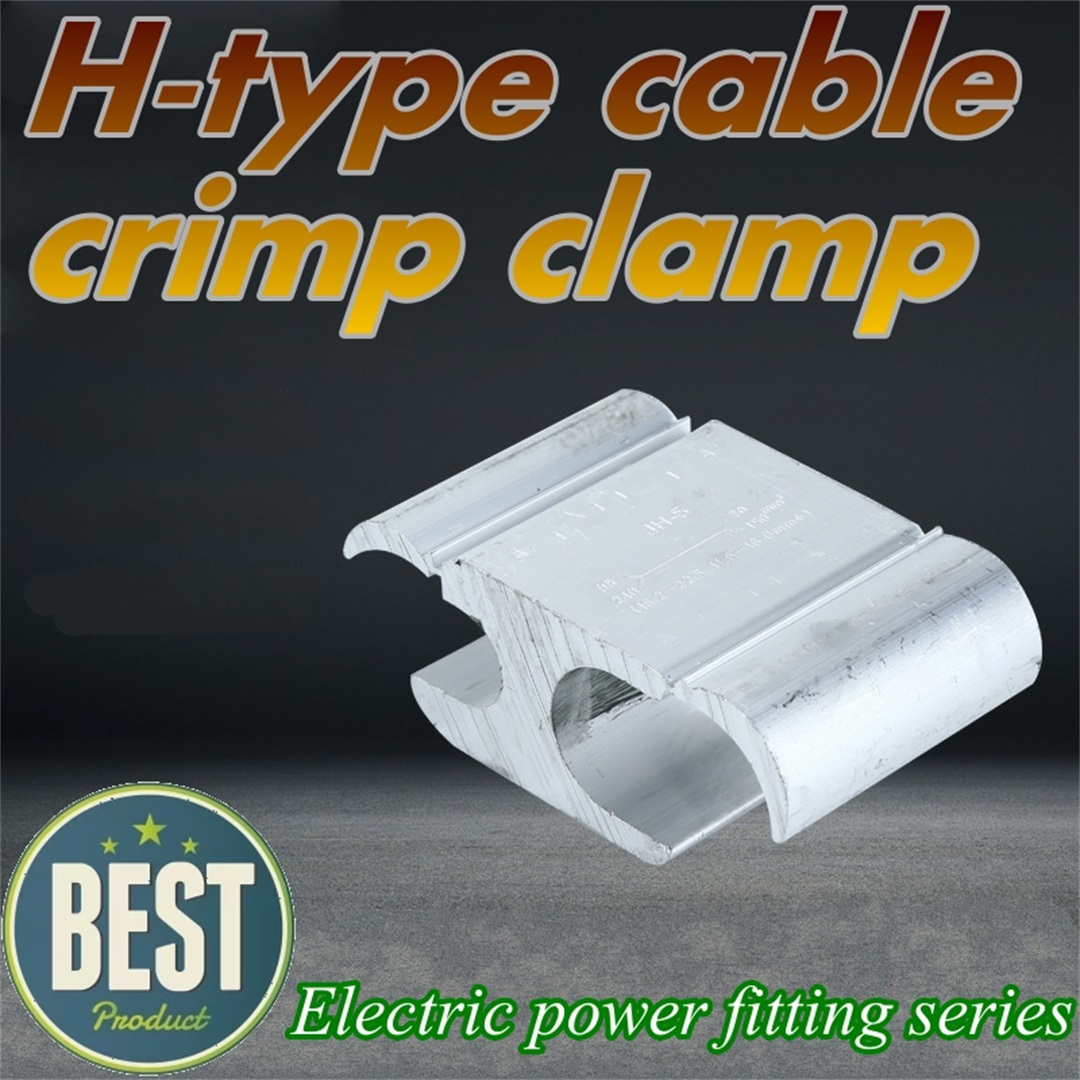
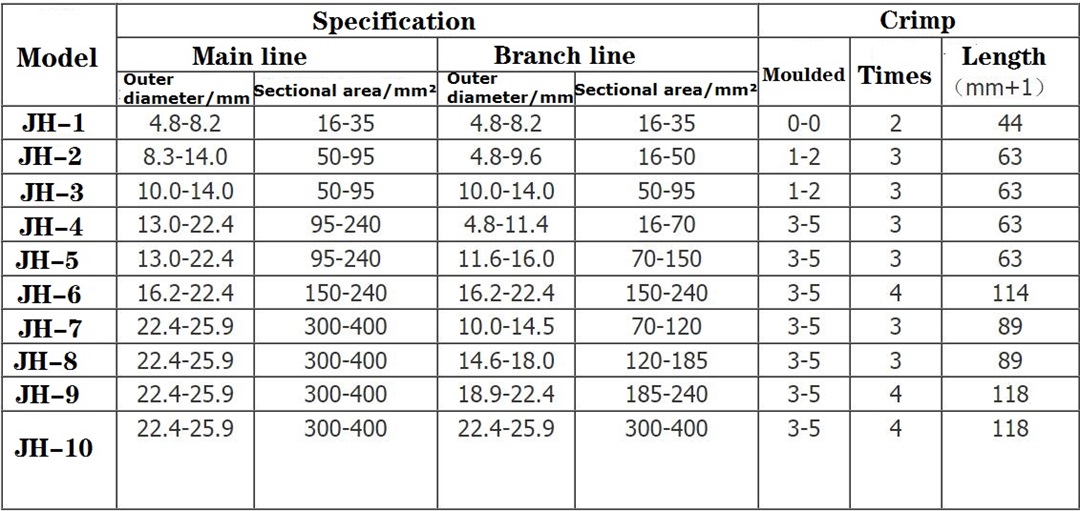
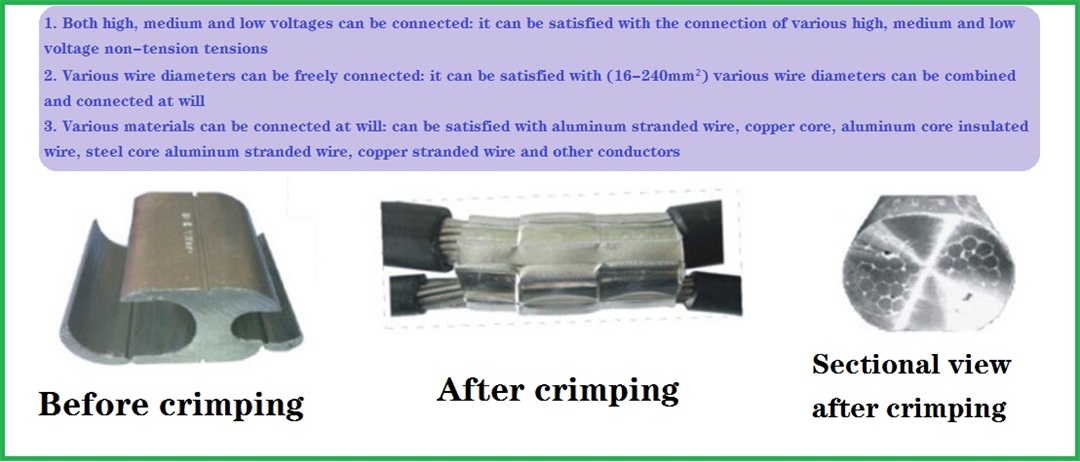
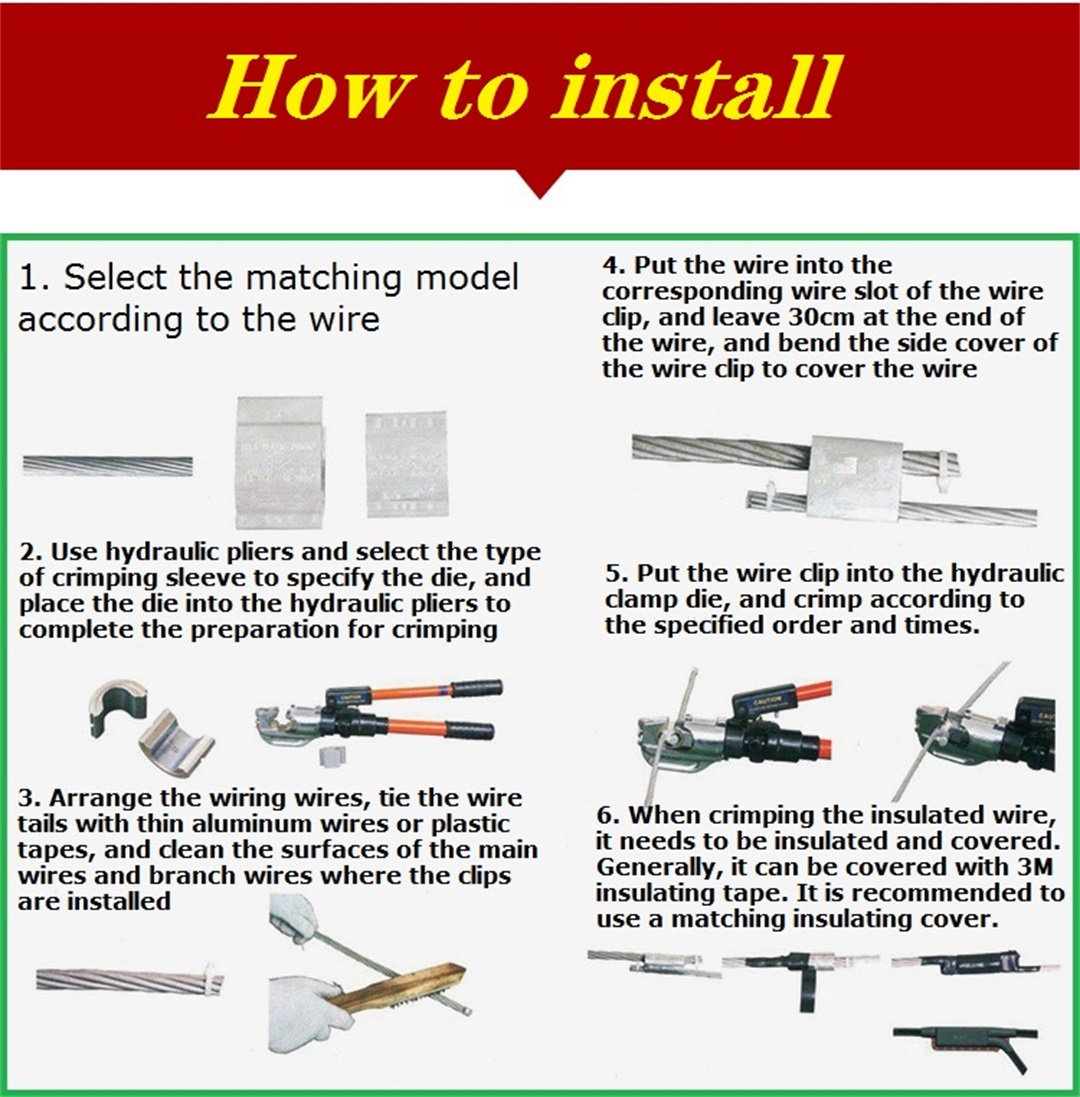
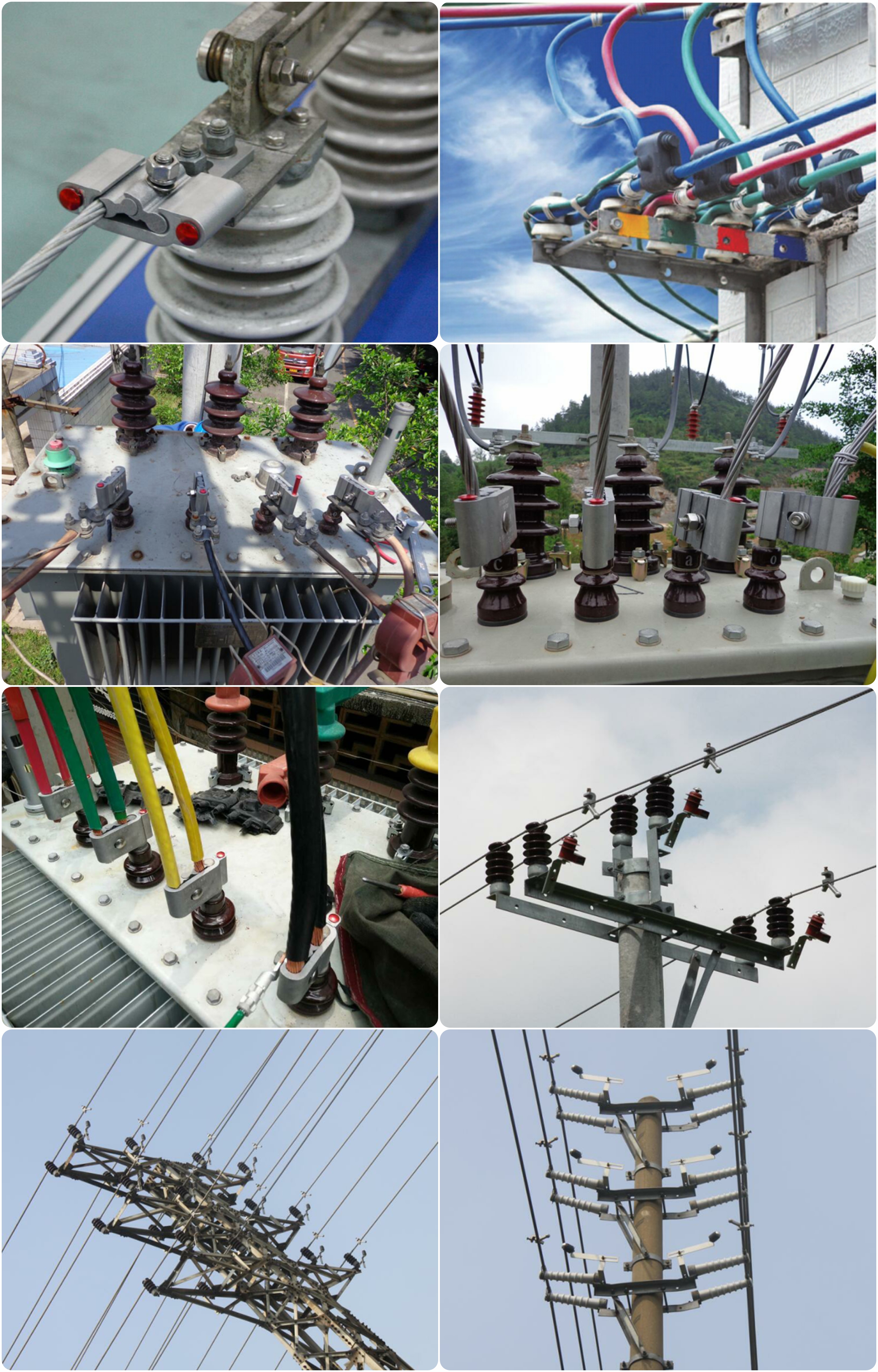
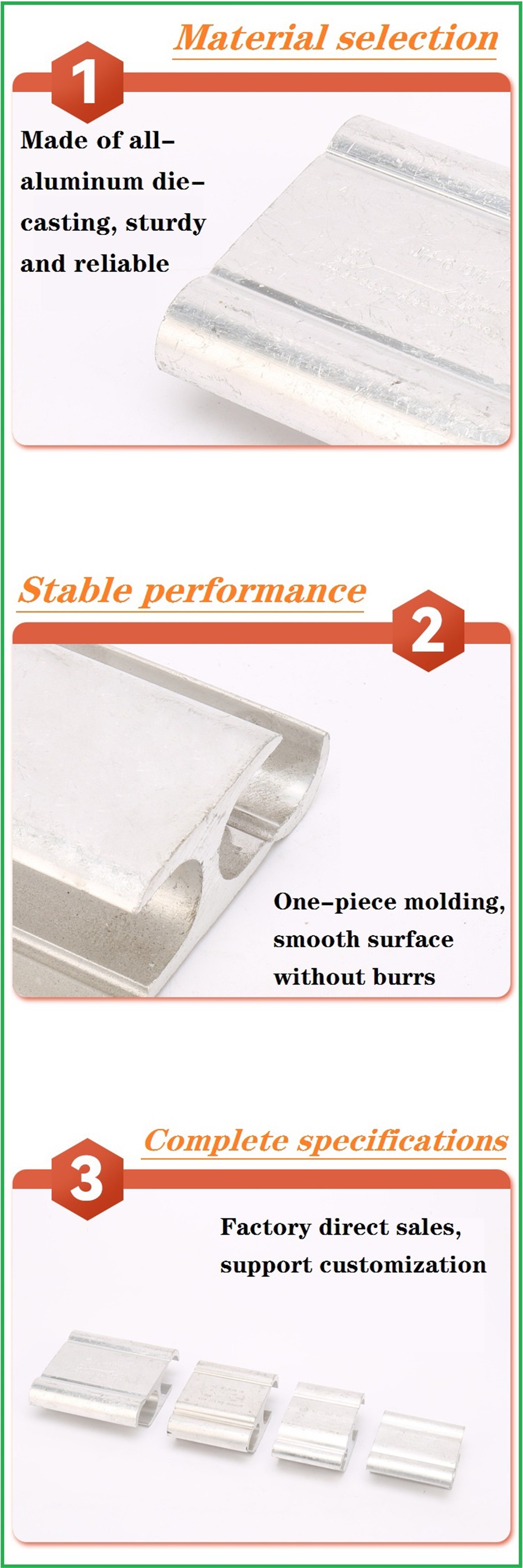
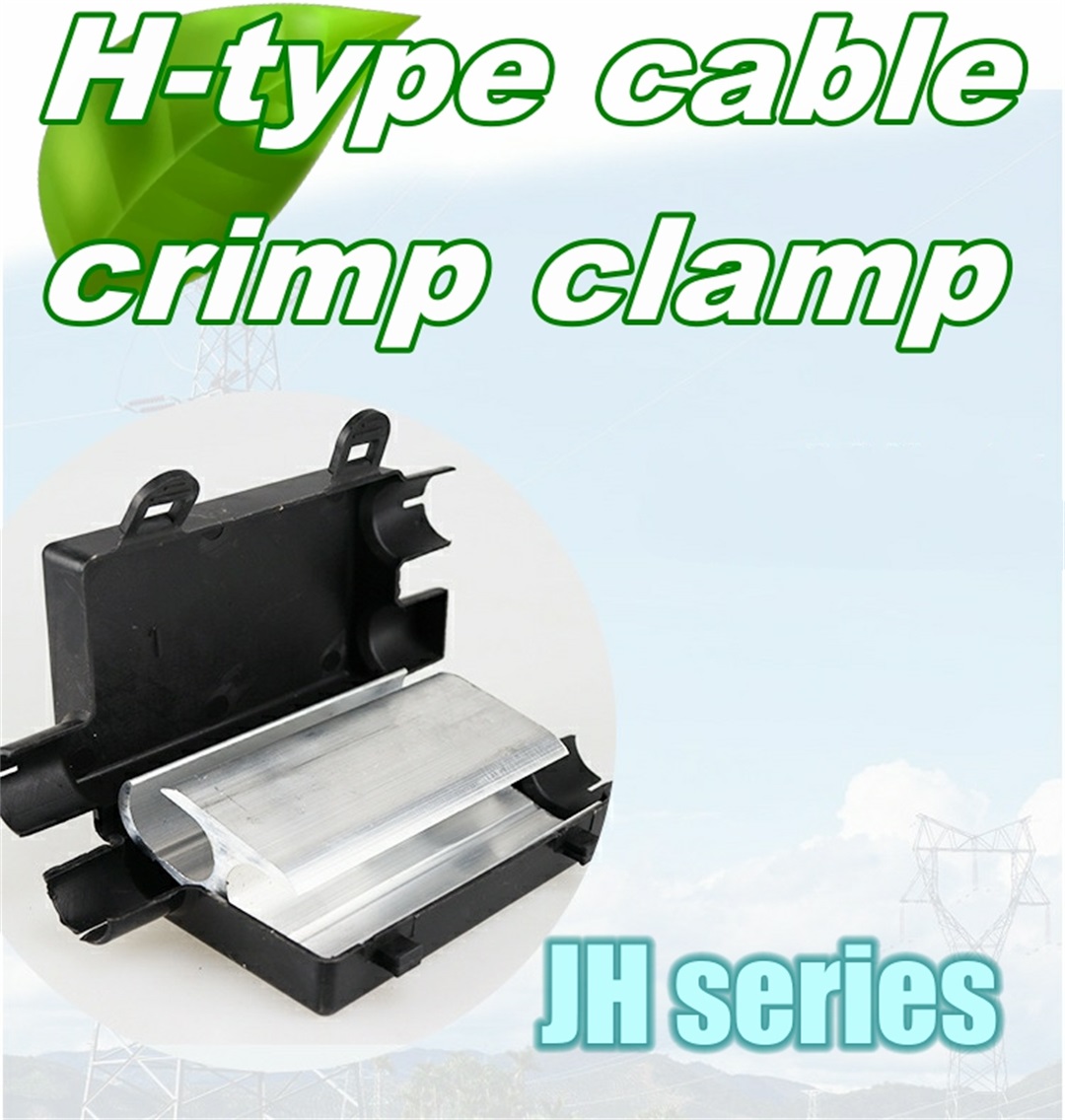
 H-type clip features: 1. The resistance value is small, saving energy. 2. The temperature rise is small and the failure is reduced. 3. Complete specifications and wide application. 4. The pressure standard and quality are unified. 5. Construction inventory, safe and convenient. Advantages of H-type clips: H-type cable clamp is a relatively new and improved cable clamp in foreign countries. It has many years of mature experience in use. First of all, the connection is safe and reliable. Since a lot of wiring connections are made between aluminum wires, this is exactly the advantage of the H-clamp. The H-type clip is based on aluminum, which is similar to the material of aluminum wire. The pressure of 12 tons is just right, and it is integrated after crimping, so even when the temperature changes, there will be no slack. Use of H-clamp: 1. Use hydraulic pliers for crimping, and install the die with the corresponding clamp size. 2. Use a wire brush to lightly wipe the crimped portion of the aluminum wire or steel-cored aluminum wire to remove the outer oxide layer. 3. Insert the secondary conductor or the conductor of the same cross-section when disconnected, into the B-groove, and press down the side fins of the B-groove with your thumb. 4. Insert the main lead into the A-line groove and press down the side fins of the A-line groove with your thumb. 5. Put the hydraulic pliers installed with the die into the crimping mark ||A|| of the wire clamp, and perform crimping according to the number of grids. 6. The hydraulic pliers must be fully output to release the pressure during each crimping, and the crimping is completed. 7. After all the crimping according to the number of grids is completed, remove the hydraulic clamp. 8. If it is an insulated wire, wipe the exposed chrome-zinc acid paste, and wrap it with high-voltage insulating self-dissolving tape to complete the insulation. Then the UV-proof tape is wrapped properly, and the whole process is completed. Or cover the wire clip with an insulating cover, fasten the clasp, and wrap the outlet with high-voltage insulating self-dissolving tape to complete the insulation.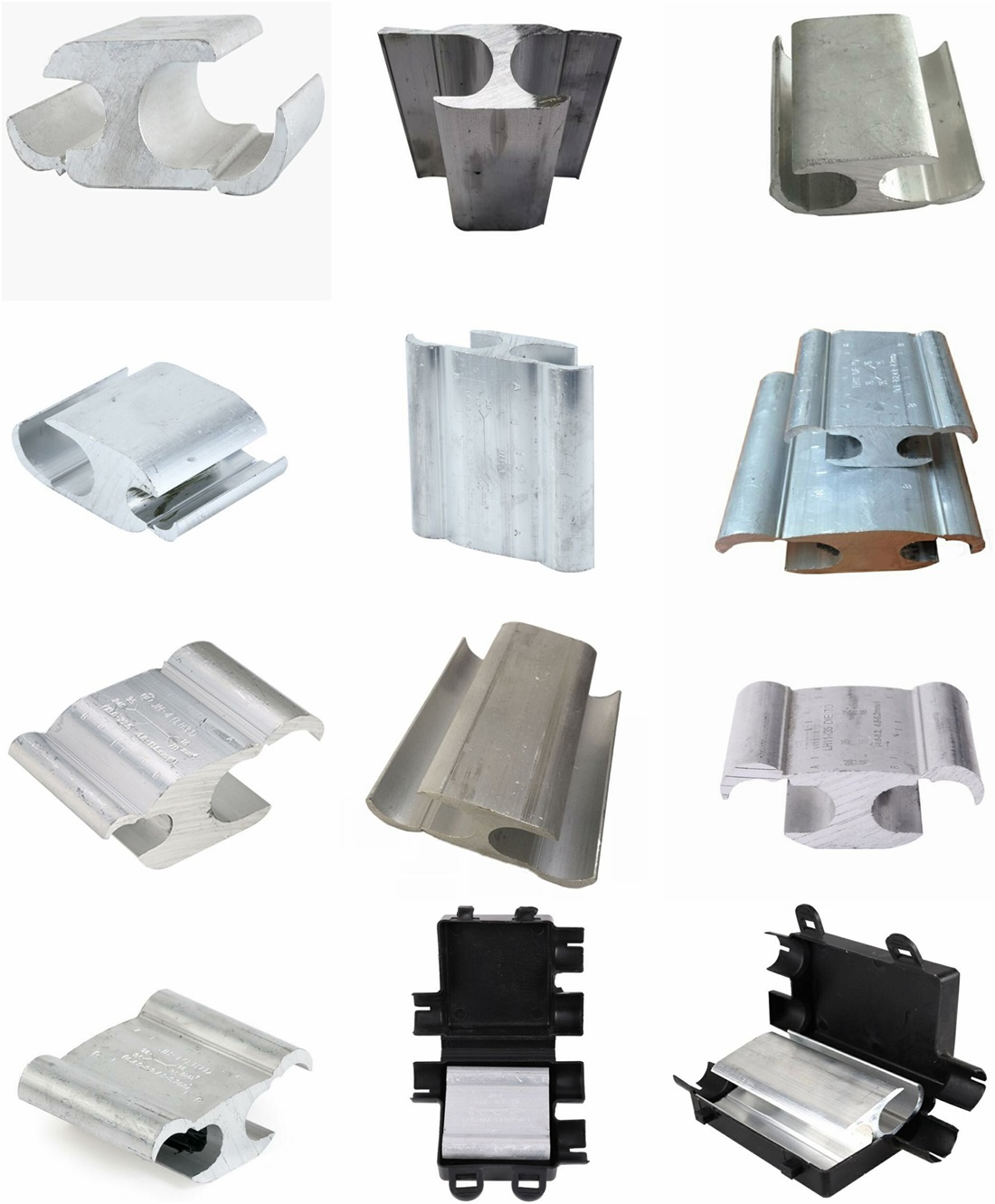
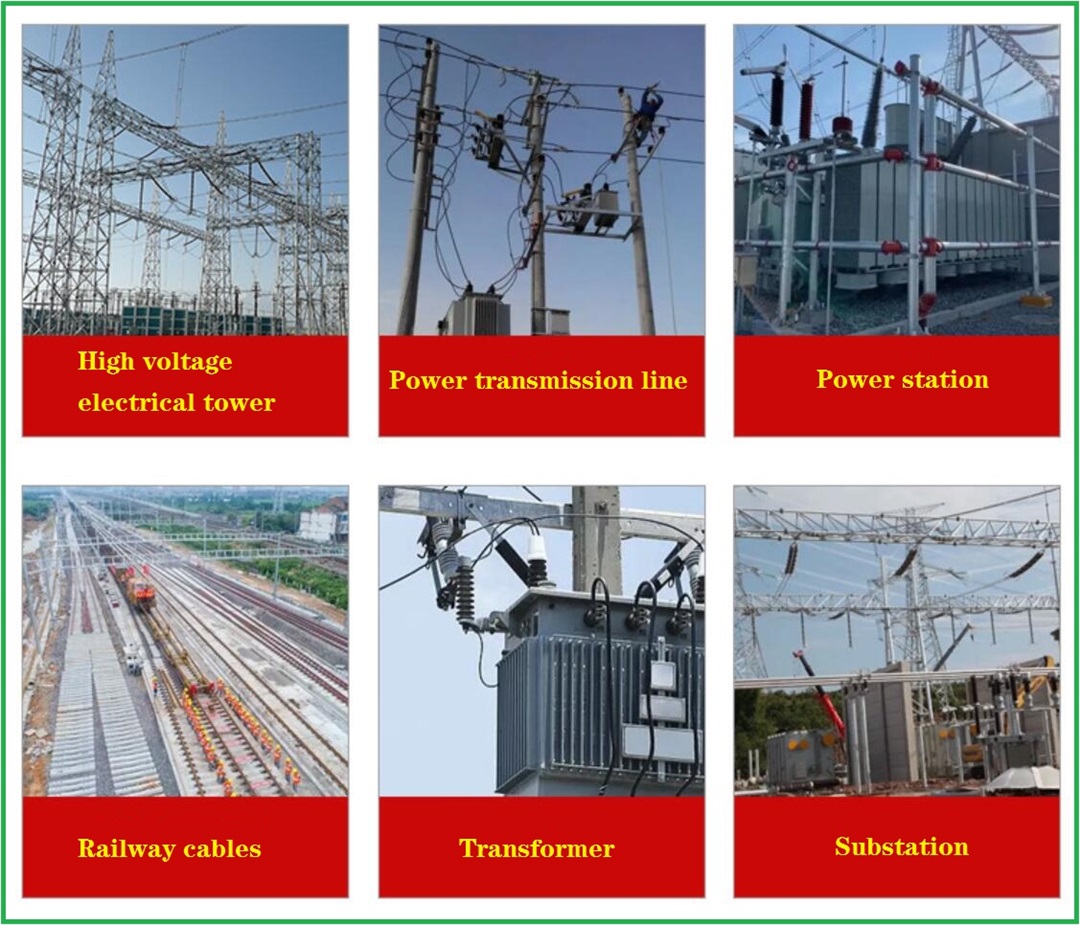 1. Tensile test Standard: IEEE IEEE Section 5.2.1 STD837-1989 NEMA IEEE Section 2.7, STD3-22-1972 Conductor cross section Minimum tension (KG) 13-54 136 67-107 227 127-253 454 The GB/T 2317-2008 standard is only 10% greater than the maximum wire breaking force, and the TEEE and NEMA standards are many times stricter than the GB standard. 2. Resistance test Standard: NEMA2.6 section, STD3-22-1972, GB/T 2317-2008 The resistance of the crimped clip shall not be greater than the two wires, and 110% of the resistance shall be taken as qualified. 3. Temperature rise test: Standard: Section NEMA2.5.2, STD5-28-1981, GB2317-2000 The temperature rise value of the self-crimped wire clip shall not be greater than the highest temperature rise value of the two wires. (When crimping different wire diameters, the temperature of the crimping point shall not be lower than the temperature of the small cross-section wire) GB/T 2317-2008 only stipulates the cross-section temperature value of the same type of wire, and there is no measurement of the temperature value of the special-shaped wire.
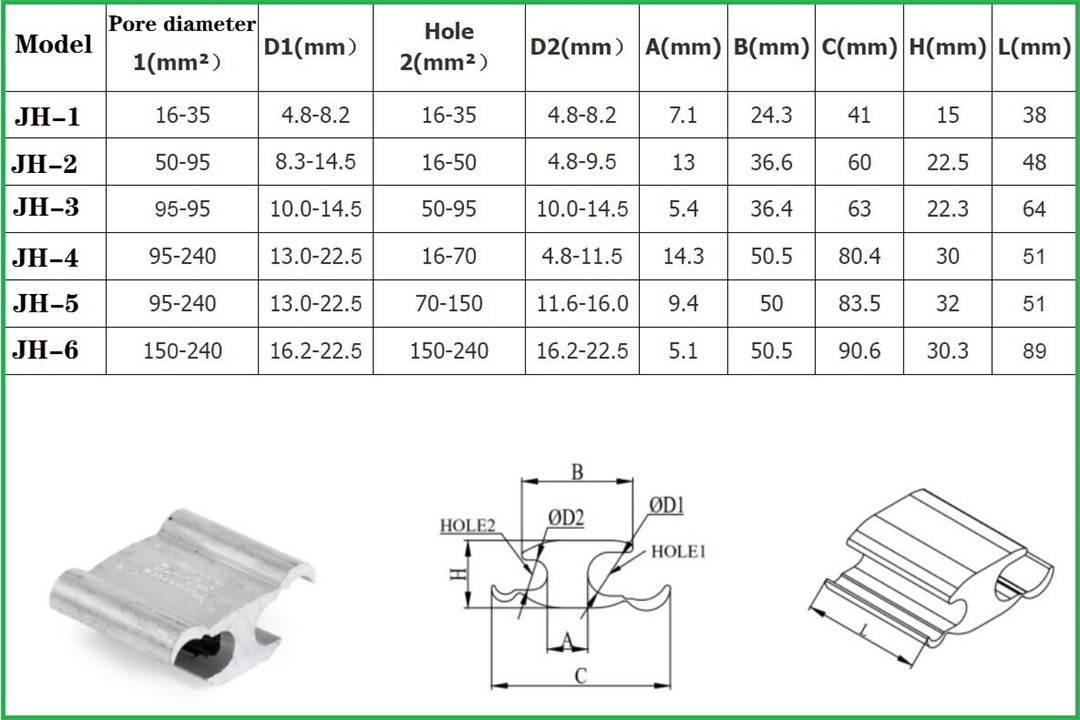
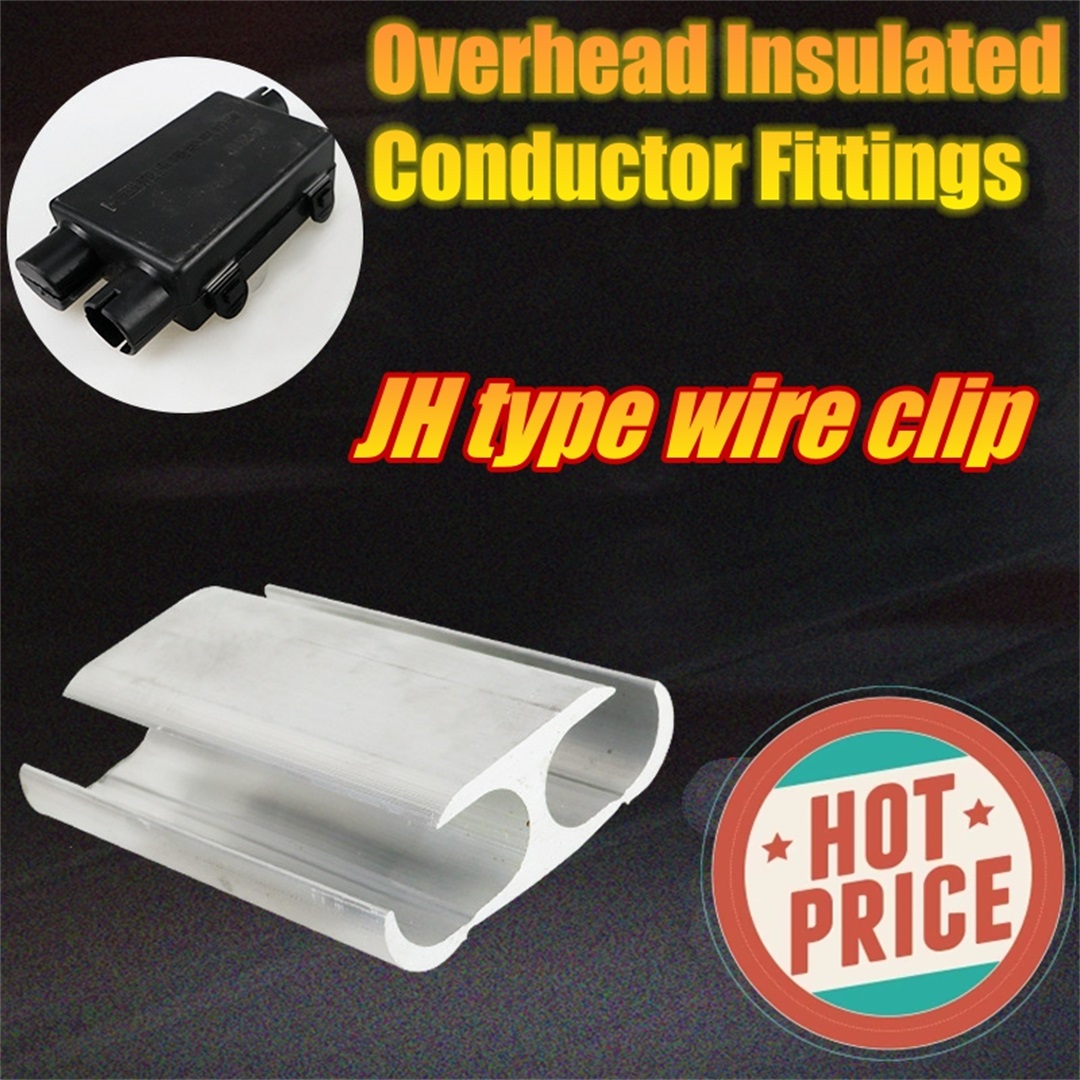 Installation Notes: 1. Check the wiring type, wire diameter and cross-section, and select the appropriate H-type crimping clamp. 2. Remember to choose suitable crimping tools and crimping molds, and the wire crimping parts should be cleaned with a wire brush before crimping. 3. Arrange the wires to avoid bending, stranding, damage, etc. After the wire tail is repaired, use clinker tape to fasten it. 4. Put the crimping clamp type ** crimping die into the crimping tool. 5. Put the wire into the appropriate wire hook of the H-type crimping clip, leave 20-30mm of the outer wire of the clip, and bend the side covers on both sides of the H-type crimping clip to cover the wire. Care should be taken that the copper wire is below the aluminum wire after crimping. 6. Use the crimping tool, align the direction, and press the crimping process instructions on the outer box in sequence from the center to the two sides, and crimp according to the best crimping sequence and number of crimping times. If it needs to be crimped three times or more, it needs to be completed from the middle to the two ends respectively, and the crimping is performed from the left to the right to the end in sequence. 7. Visually inspect the crimping results. 8. After the insulation wire is crimped, it still needs to be covered with insulating tape. Comparison of H-type crimp clamps and traditional clamps: 1. Scope of application: Crimpable conductors: Cu-Al, Al-Al, Cu-Cu. Can be crimped with wires of the same diameter and different diameters. The wire diameter is not standardized, it can also be applied. 2. Material and structural design All-in-one molding and comprehensive coverage of different lines. Good electrical conductivity, uniform current distribution and low temperature rise. No corrosion problems. 3. Construction: Light weight (weight ratio of H-type clamps to parallel groove clamps = 1:8.836). Less specifications, easy to carry, reduce the labor intensity of construction personnel. Less construction time and convenient live work. Construction quality (hydraulic clamp). No need to apply anti-oxidative protective oil. 4. Benefits: H-type aluminum wire clips only need 6 specifications, which can meet the crimping use of all aluminum and copper wires from 16 to 240mm2. Prevent power outage accidents caused by disconnection of power lines, and reduce the loss of "small power supply" of power supply. The application specification is simplified, and the preparation of hardware materials is convenient. Reduce power loss in the line. Reduce operation and maintenance costs. Long life and good durability.